Thursday Three - 15 12 2022

  • AAG Research Trust - 2023 research grant rounds
  • AAG background paper and recommendations - Older people leaving prison
  • Representing ethnic minority groups in dementia research: Webinar recording
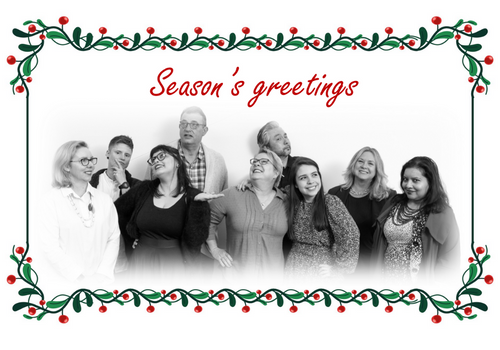
  • And a fourth item for today: Season’s greetings from the AAG team

AAG Research Trust 2023 research grant rounds

The aim of the AAG Research Trust grant programs is to enable research, identify and seed-fund knowledge development in areas that are not well addressed by current research funding, and attract new and experienced researchers and practitioners to develop careers in the ageing field. 

AAG Research Trust grants are available only to AAG members. We encourage all eligible AAG members to apply and strongly encourage applications from practitioners alone or in partnership with researchers.

We are pleased to confirm that next year’s RM Gibson and Strategic Innovation Program grants will open in late February 2023. The Hal Kendig Research Development Program will open mid-year.

The new year’s grants will bring an increase in amount, as well as a new dedicated grant for Aboriginal and Torres Strait Islander-led research.

At a glance: 2023 grants rounds

There will be three available grant call-outs in the first quarter of 2023:

  • The aim of the RM Gibson Program is to support early career researchers and practitioners in the diverse fields related to ageing in Australia. In 2023 we are delighted to announce an increase in grants of up to $10,000. An additional Dementia Australia Research Foundation of $10,000 for an application with a substantive dementia focus may be funded as part of a partnership with the AAG Research Trust and DARF. At the discretion of the AAG Research Trust and DARF, this funding may be used to expand the number of grants that can be funded under the RM Gibson Program, to a quality and fundable application.

  • The Strategic Innovation Program aims to support researchers to facilitate dynamic and responsive research that will improve research impact by contributing to research translation up to $30,000.

  • A dedicated Aboriginal and Torres Strait Islander grant of $25,000 is available for applications focusing on Aboriginal and Torres Strait Islander-led research with older Aboriginal and/or Torres Strait Islander people and their communities. 

Click here for further information regarding the three grant streams on offer.  More detail will be posted in January 2023. 


AAG background paper and recommendations - Older people leaving prison

We are pleased to share a new AAG background paper, including recommendations and priority next steps, on the issues facing older people leaving prison. 

Older adults who are currently incarcerated represent a diverse group of individuals with unique backgrounds. This diversity means that people ageing in prison often have complex, and unique, health, social and aged care needs. There is a pressing need to better understand the experiences of older adults leaving prison to enable better transition planning and post-release support, so they have better opportunities to age adaptively and with dignity.

In this paper, we summarise the key issues faced by older people who are leaving, or who have left, prison and need health, aged care and/or social services. We explain the importance of transition planning and highlight the barriers that older incarcerated people face in accessing health, social and aged care supports when, and after, leaving prison.

This is an important topic that warrants special attention.

Click here for the AAG Background Paper - Issues facing older people leaving prison. 

Click here for the AAG Recommendations - The priority next steps to support older people leaving prison to age adaptively with dignity. 


Representing ethnic minority groups in dementia research: Webinar recording

In July 2022, we published a new AAG report on ‘Using government data and data linkage to promote health and improve the ageing experience for Australia’s culturally and linguistically diverse (CALD) population’. That report came from a workshop that was part of the 2021 AAG Conference – Digital, and was hosted by AAG’s Culturally and Linguistically Diverse (CALD) special interest group

In response to discussions in the workshop, one of our commitments was to identify topics where research evidence exploring cultural and linguistic diversity and ageing in Australia could guide policy and practice. We also committed to continue advocating for the use of a broad and appropriate range of measures capturing cultural and linguistic diversity in government data collection and reporting.

And so we are pleased to share a webinar - 'Representation of ethnic minority groups in dementia risk factor', from one of our AAG Collaborative Research Centres (CRCs),  the Centre for Excellence in Population Ageing Research (CEPAR), in which leaders in the field present an overview of important issues to consider when analysing ethnicity data in cohort studies. They also share results of a scoping review that applies these principles to assess the quality of inclusion of ethnic minority groups in dementia risk factor research.


Click here for the report - ‘Using government data and data linkage to promote health and improve the ageing experience for Australia’s culturally and linguistically diverse (CALD) population’

Access many others reports in our AAG Resource Library

Click here for the webinar -'Representation of ethnic minority groups in dementia risk factor 

Season's greetings from AAG
This is our final Thursday Three for 2022.

As the year draws to a close, we take this opportunity to thank all members for their engagement with and contribution to AAG.

The National Office will be closed from Friday 23 December and will reopen on Tuesday 3 January. 

We will also have reduced staffing in January, as a few members of the AAG team take well-deserved longer breaks. Just follow their auto replies, as needed. 

From the team at AAG National Office, here’s wishing you all the very best for 2023.

We look forward to bigger and better opportunities and successes, working together to improve the experience of ageing through connecting research, policy and practice.