2026 Helen Barrie Prize finalists
This month we feature the work of three AAG SECG researchers who were finalists in the recently announced Helen Barrie National Prize. The purpose of the prestigious Prize is to both recognise and highlight the outstanding research contributions of AAG SECG members through a published peer-reviewed journal article.
The article summaries demonstrate the breadth and strength of AAG SECG member research.
Dr Rik Dawson, The University of Sydney
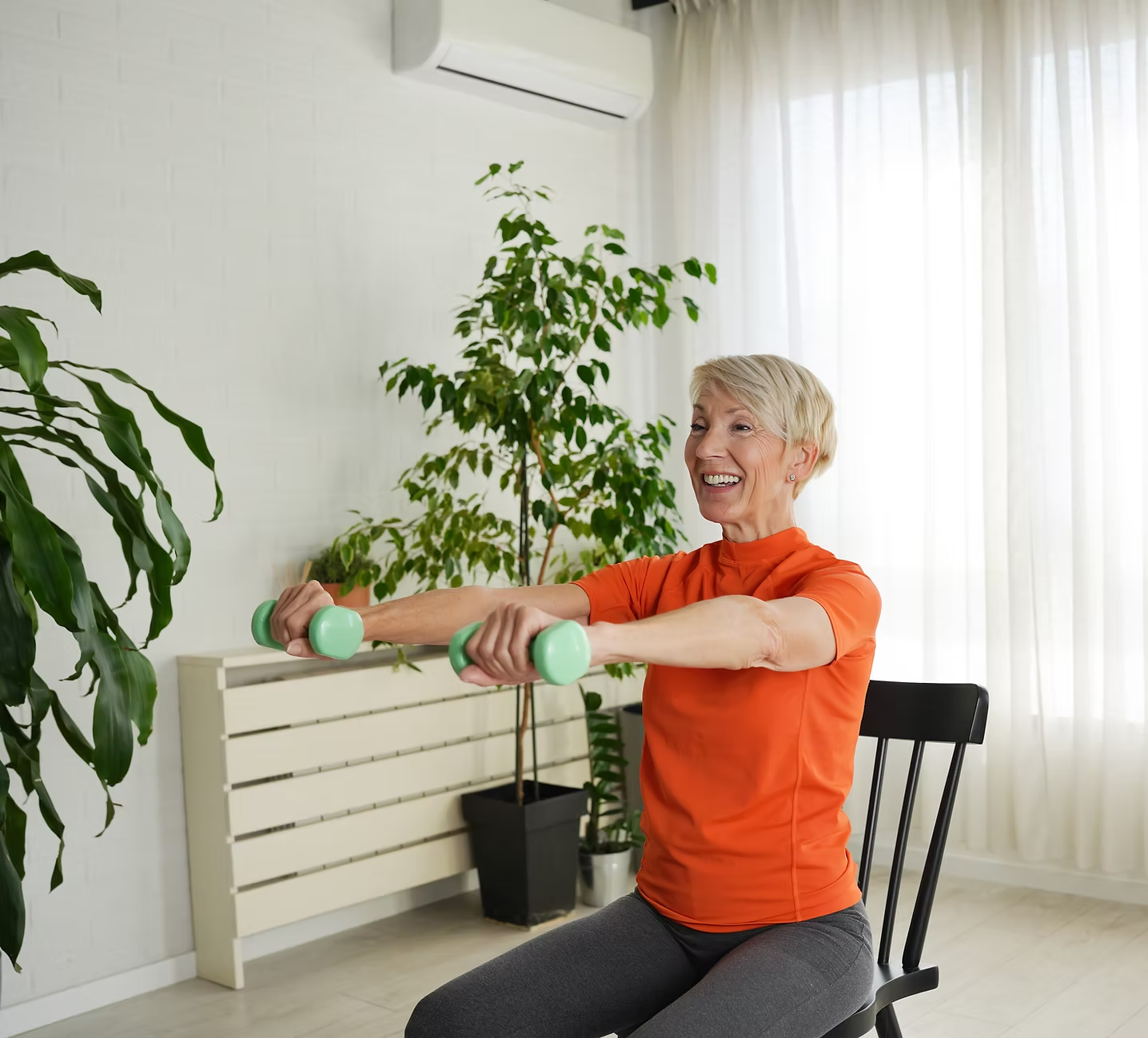
The Telephysiotherapy for Older People (TOP-UP) program for improving mobility in people receiving aged care: a hybrid type 1 effectiveness–implementation randomised controlled trial
Older people receiving aged care are at high risk of falls, reduced mobility, and loss of independence. Regular strength and balance exercise can help, but many older people have limited access to physiotherapy services, especially in rural and residential aged care settings.
Our research explored whether physiotherapy could be delivered safely and effectively through telehealth. We developed the TOP UP program, which combines video physiotherapy sessions, tailored exercise videos, and support from aged care workers. The program was co-designed with older people, physiotherapists, and aged care staff to ensure it was simple, engaging, and accessible.
In our Australian trial, older people who participated in TOP UP improved their mobility, balance, and quality of life, and were less likely to fall by 38%. Most participants said they would recommend the program to others.
More information about the program is available at TOP UP Exercise Program or [email protected].

Dawson, R., Pinheiro, M., Oliveira, J., Haynes, A., Naganathan, V., Taylor, M.E., Bowes, N., Nelson, K., Rayner, J. and Sherrington, C. (2025), The Telephysiotherapy for Older People (TOP-UP) program for improving mobility in people receiving aged care: a hybrid type 1 effectiveness–implementation randomised controlled trial. Med J Aust, 223: 205-213. https://doi.org/10.5694/mja2.70004
Dr Dana Pourzinal, The University of Queensland
Best practice guidelines for the diagnosis, evaluation, and management of cognitive disorders in Parkinson’s disease
Most people think of Parkinson’s disease (PD) as a movement disorder. But for many people, the condition affects much more than movement. Changes in thinking, memory and decision-making are common, and many people living with PD eventually develop dementia.
Despite this, cognitive symptoms in PD are often overlooked or recognised too late. Many families are left unsure about when to seek help, what symptoms mean, and how to access the right support and care.
To help improve care, the Australian MRFF-funded PDCogniCare Program recently developed new best-practice guidelines for the diagnosis, assessment and management of cognitive disorders in PD.1 Led by Prof Nadeeka Dissanayaka, the guidelines aim to support earlier recognition of cognitive symptoms and more consistent care for people living with PD.
A key message from this work is that cognitive symptoms in PD should be addressed proactively to create more opportunities for timely care, support, and planning.
For more information contact [email protected]

Dana Pourzinal, Deborah Brooks, Deepa Sriram, Emily Mccann, James M King, Nancy A Pachana, Kirstine Shrubsole, Brian Wood, Alexander Lehn, Rodney Marsh, Jacki Liddle, Leander K Mitchell, John D O'Sullivan, Edwin C K Tan, Neil Page, Elton H Lobo, Martie-Louise Verreynne, Sabrina Lenzen, Nadeeka Dissanayaka, Best practice guidelines for the diagnosis, evaluation, and management of cognitive disorders in Parkinson’s disease, Age and Ageing, Volume 55, Issue 3, March 2026, afag063, https://doi.org/10.1093/ageing/afag063
Olivia Maurice, Western Sydney University
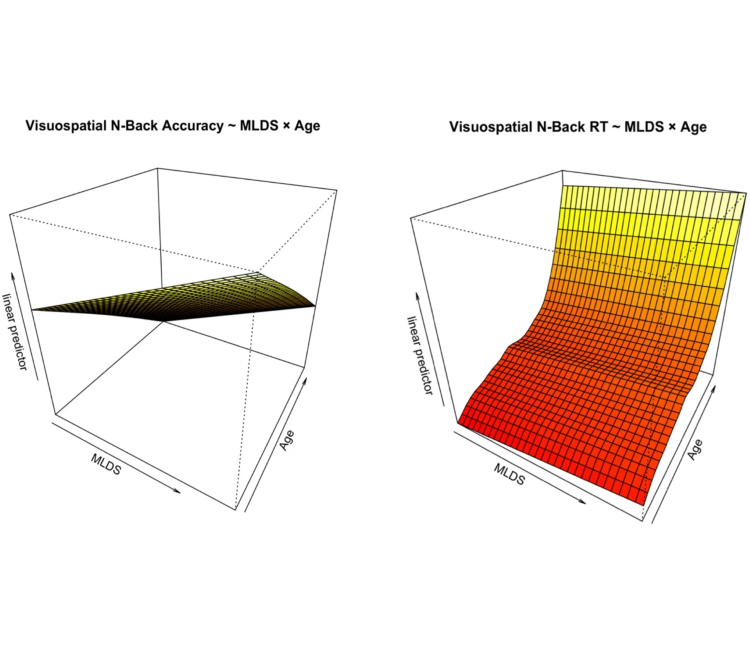
Selective cognitive effects of multilingualism emerge in visuospatial working memory in later life
As people age, many worry about memory loss and cognitive decline. Our research explored whether speaking more than one language across the lifespan may help protect specific aspects of cognition in later life. In this study, we examined older adults with diverse language backgrounds and tested skills such as attention, inhibition, and working memory. We found that multilingual experience was linked to stronger visuospatial working memory — the ability to temporarily hold and manipulate visual and spatial information, such as remembering locations, directions, or patterns. However, multilingualism did not appear to benefit all areas of cognition equally.
These findings suggest that the cognitive effects of multilingualism may be selective rather than universal. Understanding how everyday life experiences, like using multiple languages, shape the ageing brain could help researchers identify lifestyle factors that support healthy cognitive ageing and resilience against age-related decline.
For more information contact [email protected]

Maurice, O.R., Jones, C. & Harris, C.B. Selective cognitive effects of multilingualism emerge in visuospatial working memory in later life. Sci Rep 16, 2321 (2026). https://doi.org/10.1038/s41598-025-32091-x